
Publisher disclosure: This is a site-published evaluation of the image tool available on gptimage-25.com. The website's upstream model snapshots were not independently verified.
This GPT Image 2.5 review compares the Flare and Sunburst options through actual image outputs, English prompts, observed generation times, and credit costs. We tested reference-based outfit changes, a business infographic, a product advertisement, and repeated photo edits to see which changes worked and which details were re-rendered.
This review asks a more demanding question: can GPT Image 2.5 turn a specific brief into a useful image while retaining the details the brief says to protect? The test began with six everyday photo edits. It then expanded to reference-based wardrobe replacement, an English operations diagram, and a product advertisement. The broader tasks make the review more informative than a collection of attractive before-and-after photographs.
All results here are actual downloaded outputs from the gpt image 2.5 Sunburst and Flare options on GPT Image 2.5 AI. Those are the website's model labels; the underlying API snapshots were not independently verified. Source photographs and additional reference assets were generated with imagegen. They depict fictional subjects and products. The article evaluates an observed website workflow, with visual assessment, rather than presenting a laboratory certification of an OpenAI API model.
Quick Verdict: Is GPT Image 2.5 Worth Trying?
Both website options produced useful outfit edits, English infographics, and product-ad drafts in the exploratory cases. The repeated photo tests also produced nine usable digital-sharing images out of nine attempts per option across portrait, pet, and object-removal tasks. Neither option established an overall quality lead. Flare had the lower observed baseline median wait, while both needed closer checking for exact preservation and print preparation.
| Finding | Flare | Sunburst |
|---|---|---|
| Baseline median completion time | 38.0 seconds; 22 timed calls | 45.6 seconds; 24 timed calls |
| Portrait, pet, and removal edits suitable for digital sharing | 9 / 9 | 9 / 9 |
| Strictly accepted three-step editing chains | 0 / 3 | 0 / 3 |
| Observed charge per baseline / advanced image | 3 / 4 credits | 3 / 4 credits |
These are website observations from September 9, 2026. The advanced cases have one attempt per option; they are examples, not reliability estimates. Full methods, timing exclusions, and original files appear below.
Display images use lossless WebP copies with identical pixels. Click an image to open the original downloaded PNG.
GPT Image 2.5 Prompts: What We Tested
Our image prompting guide turns a creative brief into an image you can evaluate, with original examples for layout, exact text, product edits, and multi-panel illustrations. Use its checklists to decide what to keep or revise.
The improvement is principally in task design, not prompt length. A useful test specifies what should change, what must survive, and what a reader can independently check. A generic request for a beautiful advertisement supplies little ground truth. A named bottle with three exact label strings, a required position, and a second request to change only its surroundings supplies much more.
Three original exploratory cases below borrow those workflow categories, using newly generated references and independently written briefs. No official example image is presented as this review's output, and the official demonstrations are not treated as measured evidence of reliability. The older photo tests remain useful as a repeated baseline, with their complete comparisons preserved in the photo-editing supplement.
How We Tested Flare and Sunburst
Testing took place on September 9, 2026. The baseline contains 48 image-producing submissions: for each website option, three independent attempts at each of five photo edits, plus three complete three-step editing chains. Every independent attempt starts from the same source. In a chain, the downloaded result becomes the next step's sole reference; the original is not quietly reintroduced to repair drift.
The advanced set reported here contains six additional submissions: one wardrobe replacement, one English infographic, and one product advertisement per option. That makes three exploratory cases per option, not three repeated trials. These cases reveal concrete behaviors and defects; they cannot establish a dependable success rate or an overall model ranking.
Within each case, both options receive the same prompt, references, resolution selection, and quality selection. The baseline uses 1K, High, PNG. The advanced set uses 2K, High, PNG to give labels and multi-panel content more room. Comparisons between the two sets are therefore descriptive, not a controlled test of whether a longer prompt improves the same image. Matching the name High also does not prove equal computational effort between options.
The files shown are unchanged downloads. Page layouts and magnified viewing windows arrange the evidence without retouching it. No misspelling, face, background, or package label was manually repaired. All 54 in-scope generated attempts are retained in the complete gallery, including intermediate baseline chain images. The baseline and advanced logs record prompts, selected settings, delivered dimensions, credit balances, and observed completion times.
Assessment separates a successful visible change from preservation. Readable lettering is checked against the requested string. Diagram arrows are checked against the specified relationships. Recognizable faces and coat patterns are judged visually, without claiming biometric equivalence or exact pixel retention. Print readiness requires appropriate dimensions and layout; attractive typography on screen is insufficient. No physical print was made.
Test 1: Reference-Based Outfit Editing
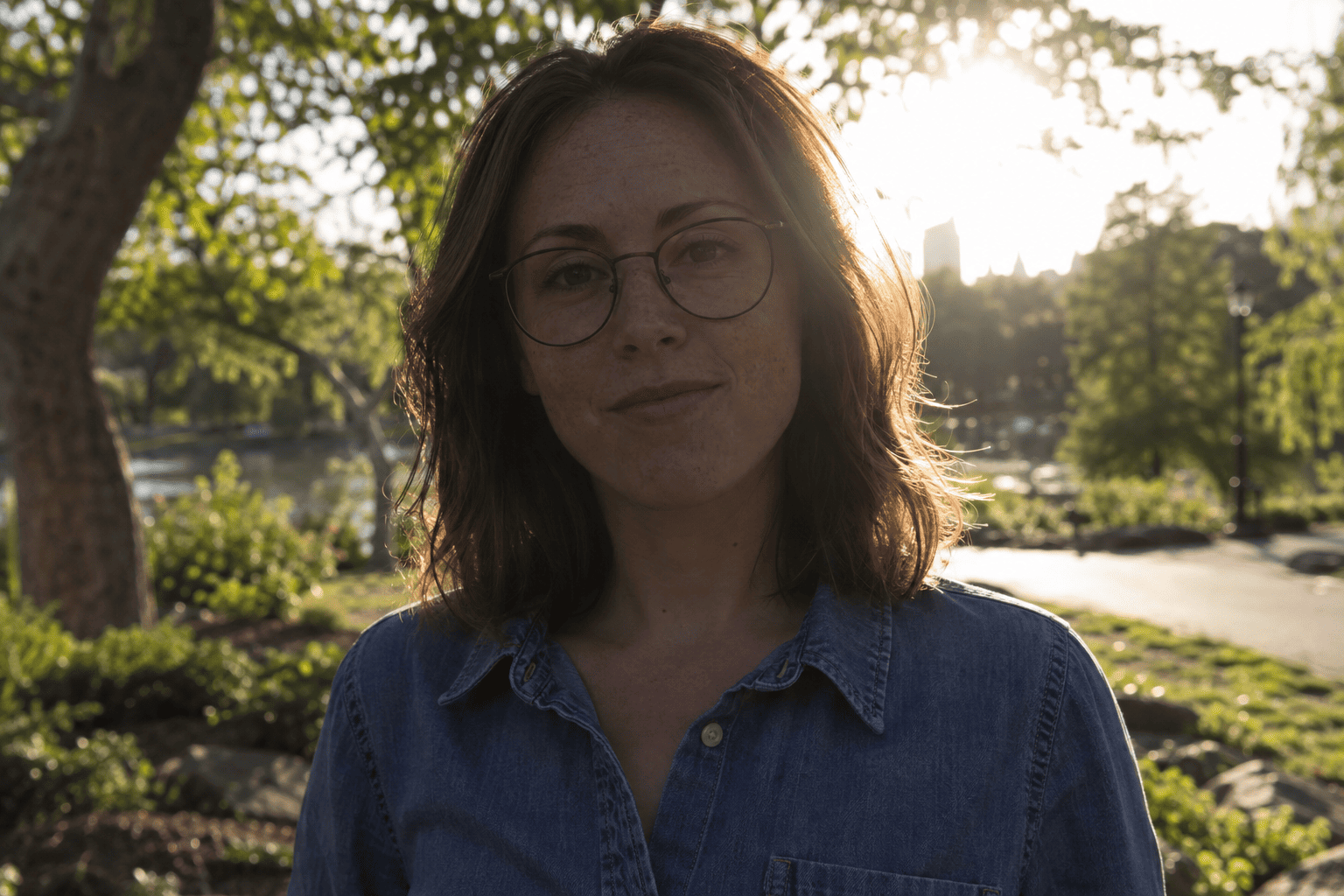
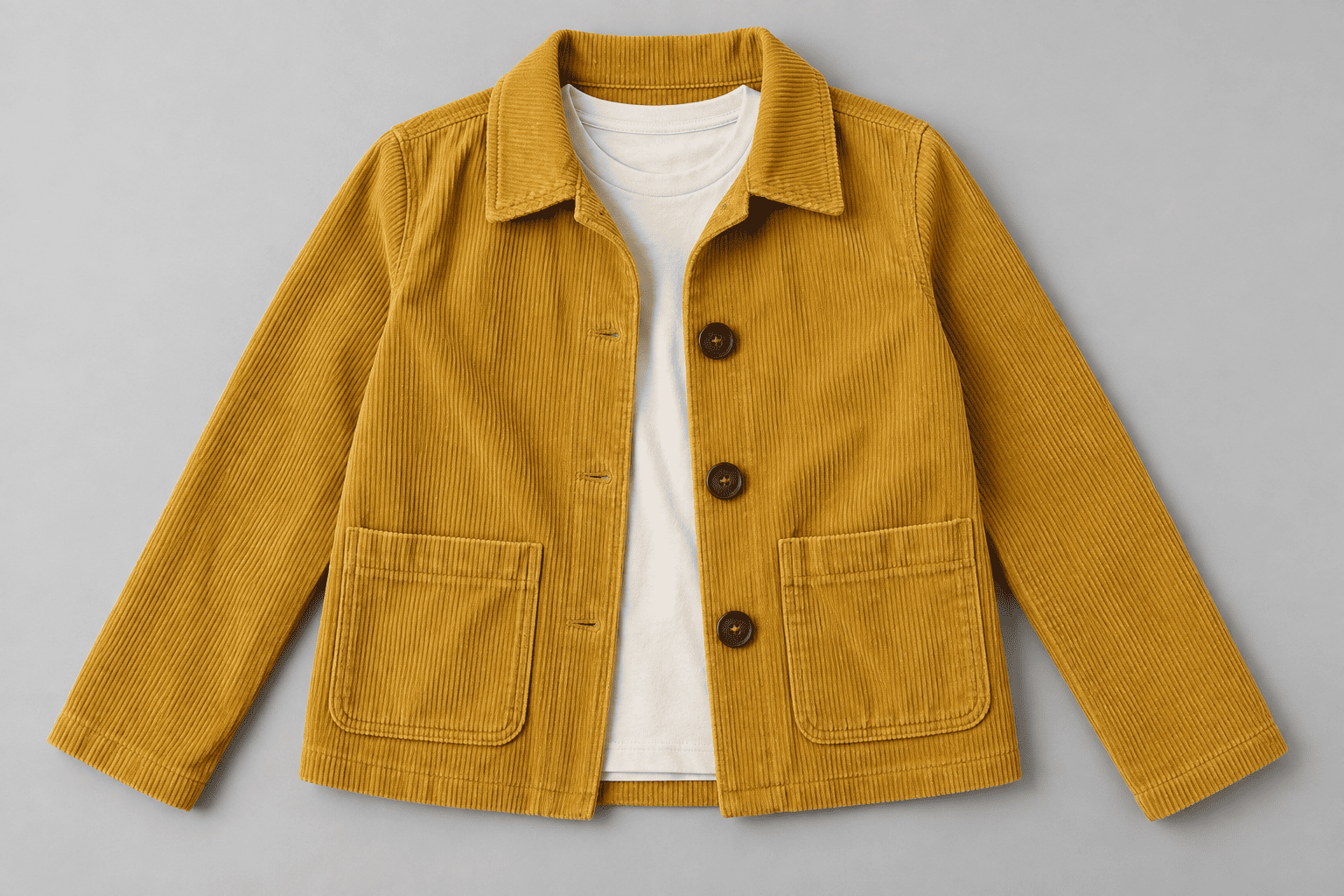
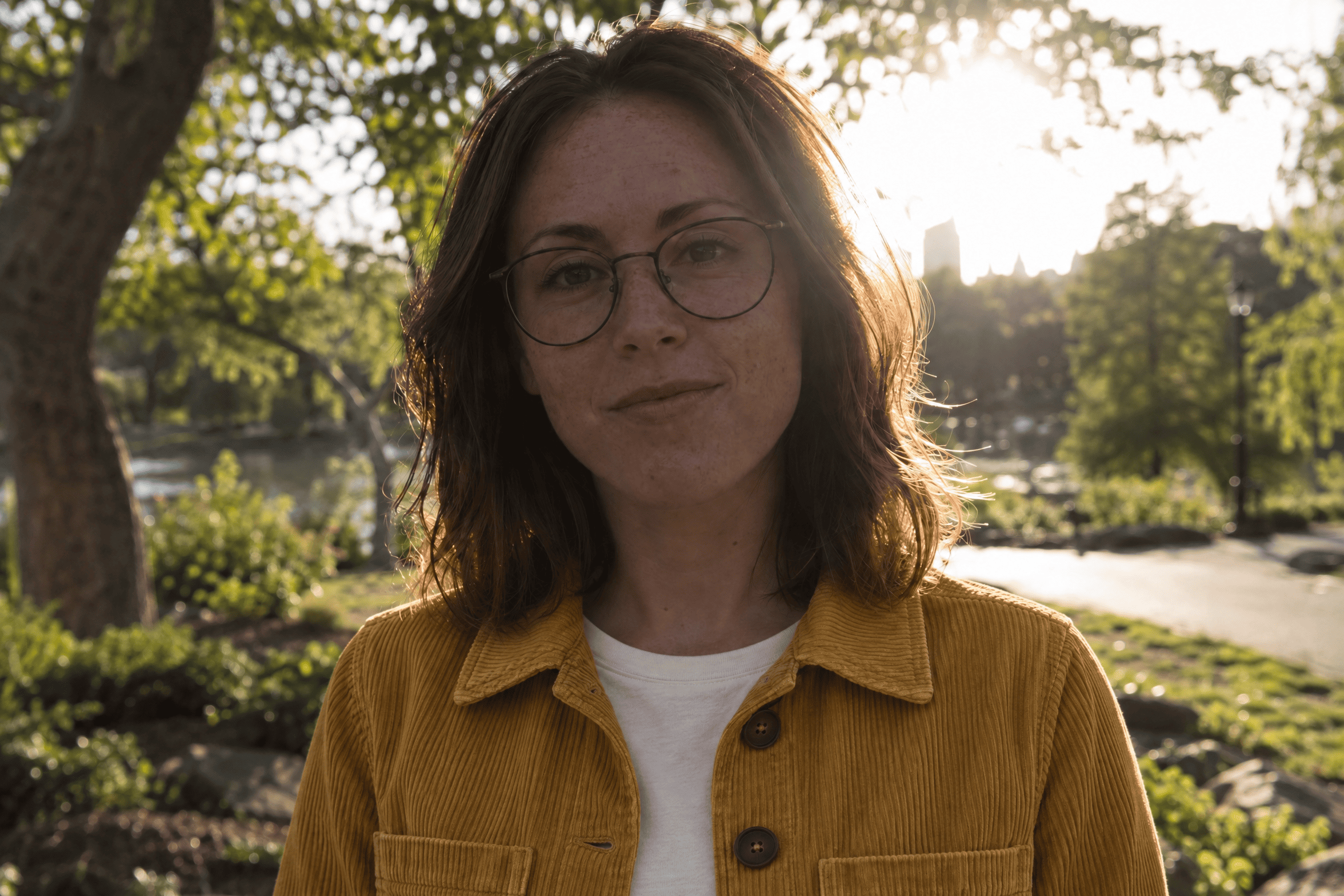
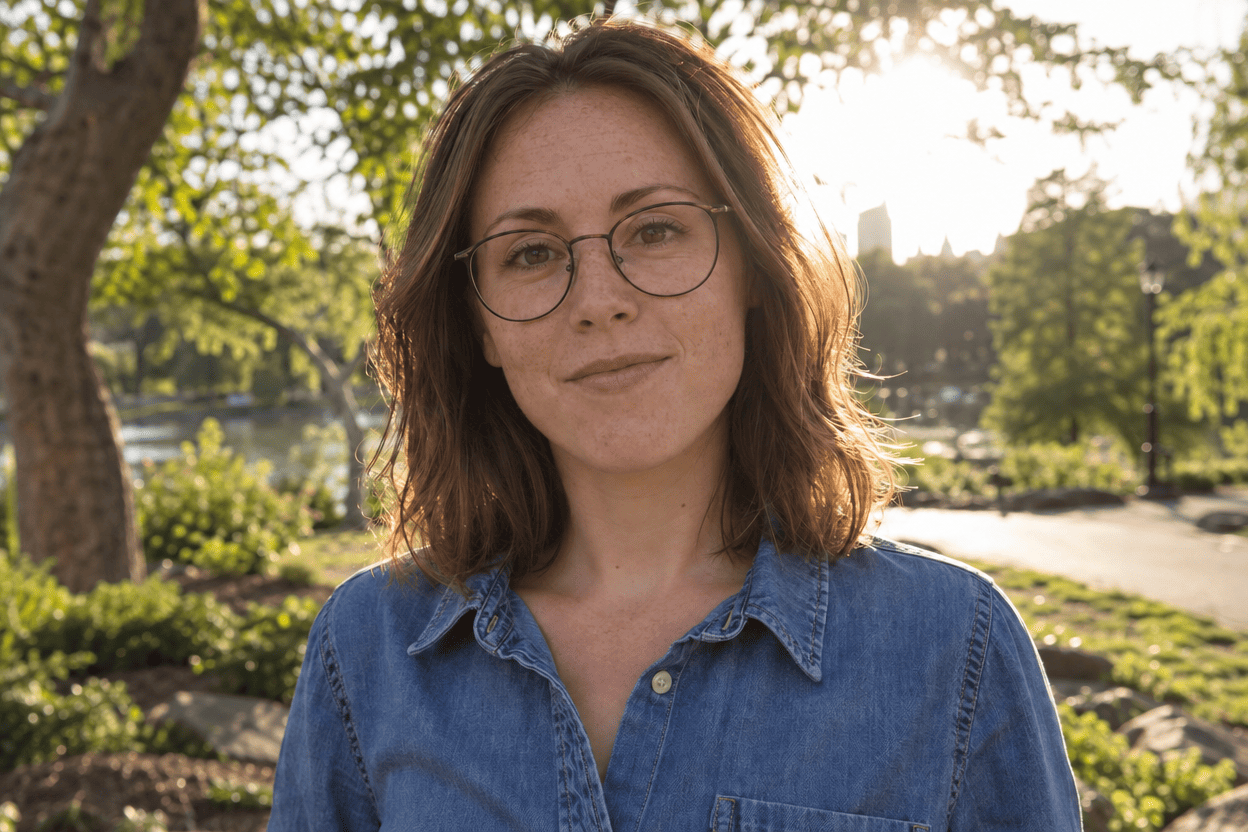
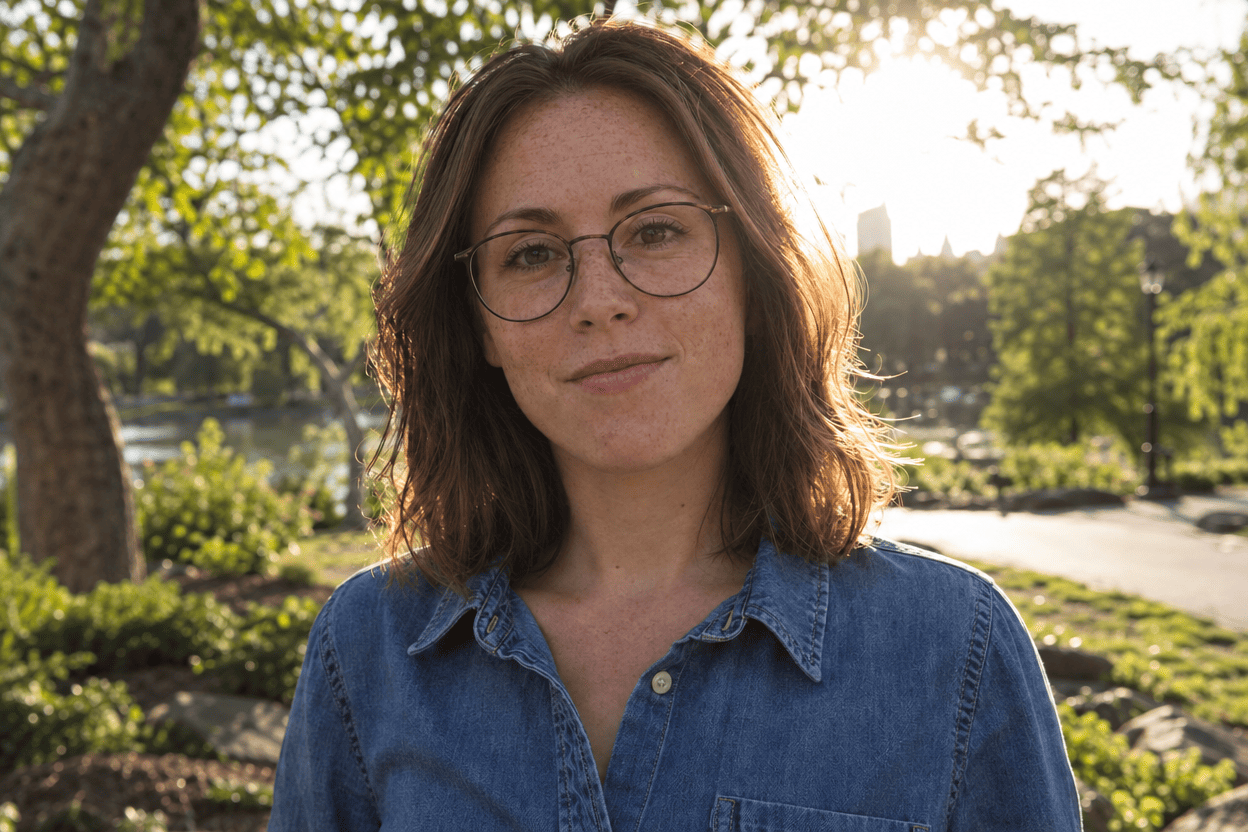
A wardrobe swap is a stronger reference-following test than asking for a person in a stylish jacket. Here, the first input is the same backlit woman used in the photo baseline. The second is a separate garment reference: a mustard corduroy jacket over an ivory crew-neck shirt. It has a pointed collar, two square patch pockets, dark brown buttons, and visible ribbing. The task is to replace the denim shirt with that specific outfit while leaving the face, exposure, park, and crop alone.
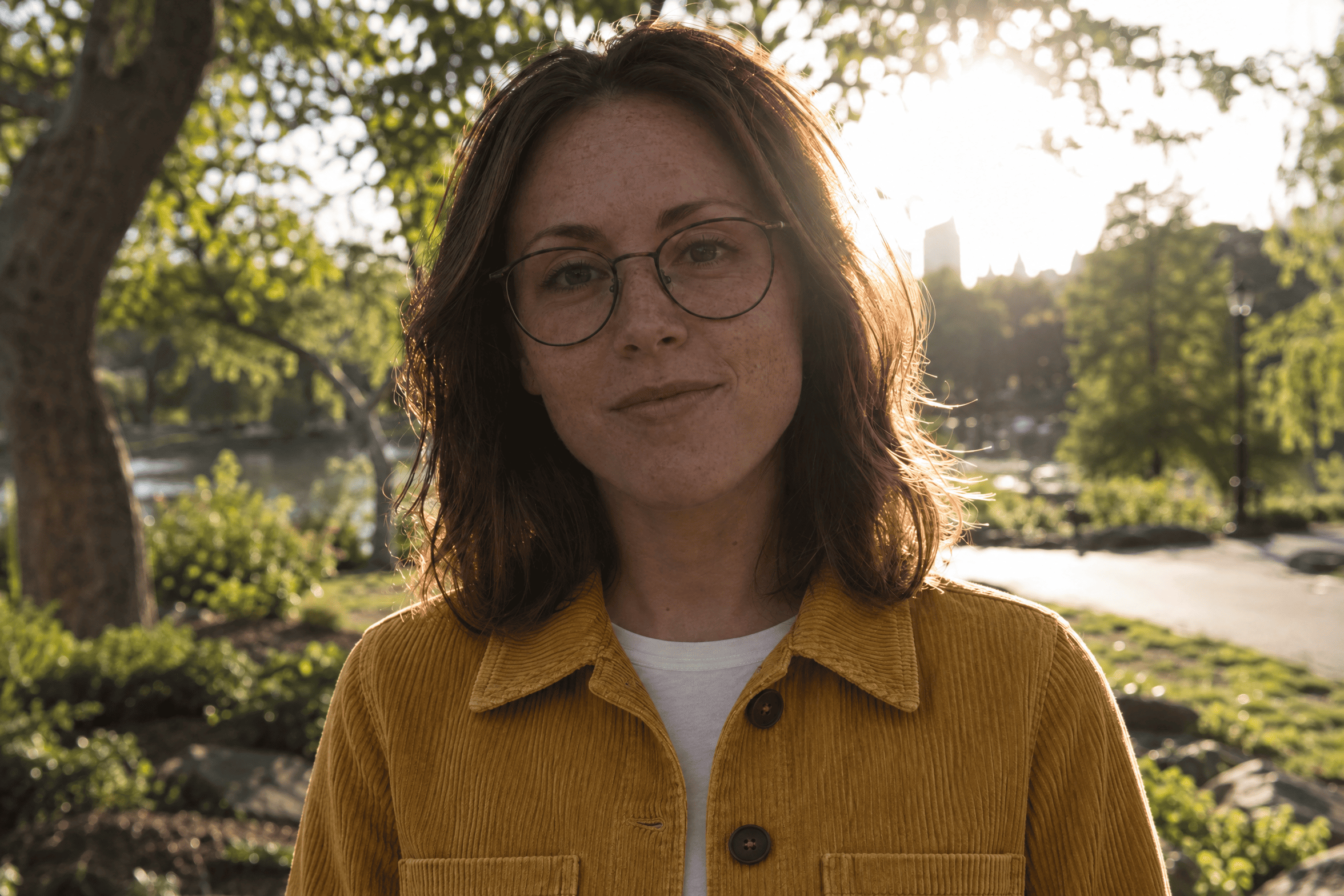
Both outputs make the requested replacement. The mustard color, corduroy texture, ivory neckline, pointed collar, visible dark buttons, and upper edges of the patch pockets appear in the portrait. The woman remains recognizable, with the same broad glasses shape, hair, freckles, expression, and pose. The strongly backlit setting remains, and neither result turns the face into the much brighter treatment requested in the separate baseline test.
That last point matters: a model should follow the current instruction rather than assume that a dark face always needs enhancement. In this task, retaining the dark exposure is part of success. The results also fit the clothing to the existing body and camera crop instead of inserting the flat-lay reference as a separate object.
The framing limits what can be verified. The source portrait ends around the upper torso, so the jacket's complete pockets, hem, and all three buttons are not available for inspection. The prompt explicitly allows the button front only where visible in that crop. It would be unfair to demand hidden garment details or claim they were successfully reproduced. Fine facial and textile detail is re-rendered, so these outputs demonstrate a convincing visible wardrobe transfer, not an exact garment-fit simulation or a pixel-identical face.
For a visual concept, both first attempts are useful. This single comparison does not establish that one option handles clothing more reliably, and it is not a substitute for checking a real item's fit before using the result as a product representation.
Exact test prompt
Edit image 1 using image 2 as the garment reference. Replace only the woman's denim shirt with the mustard corduroy jacket and ivory crew-neck shirt shown in image 2. Match the reference jacket's pointed collar, two square patch pockets, dark brown buttons, and ribbed fabric; include the three-button front where it is visible within the existing crop. Fit the outfit naturally to her current body and pose. Keep the woman from image 1 recognizable and unchanged: same face, freckles, dark glasses, hair, expression, skin tone, body shape, and pose. Keep the backlit park, exposure, sunlight, camera position and crop from image 1. Do not brighten the face or redesign the jacket. No new accessories, text, or watermark.
Test 2: English Text and Infographic Accuracy
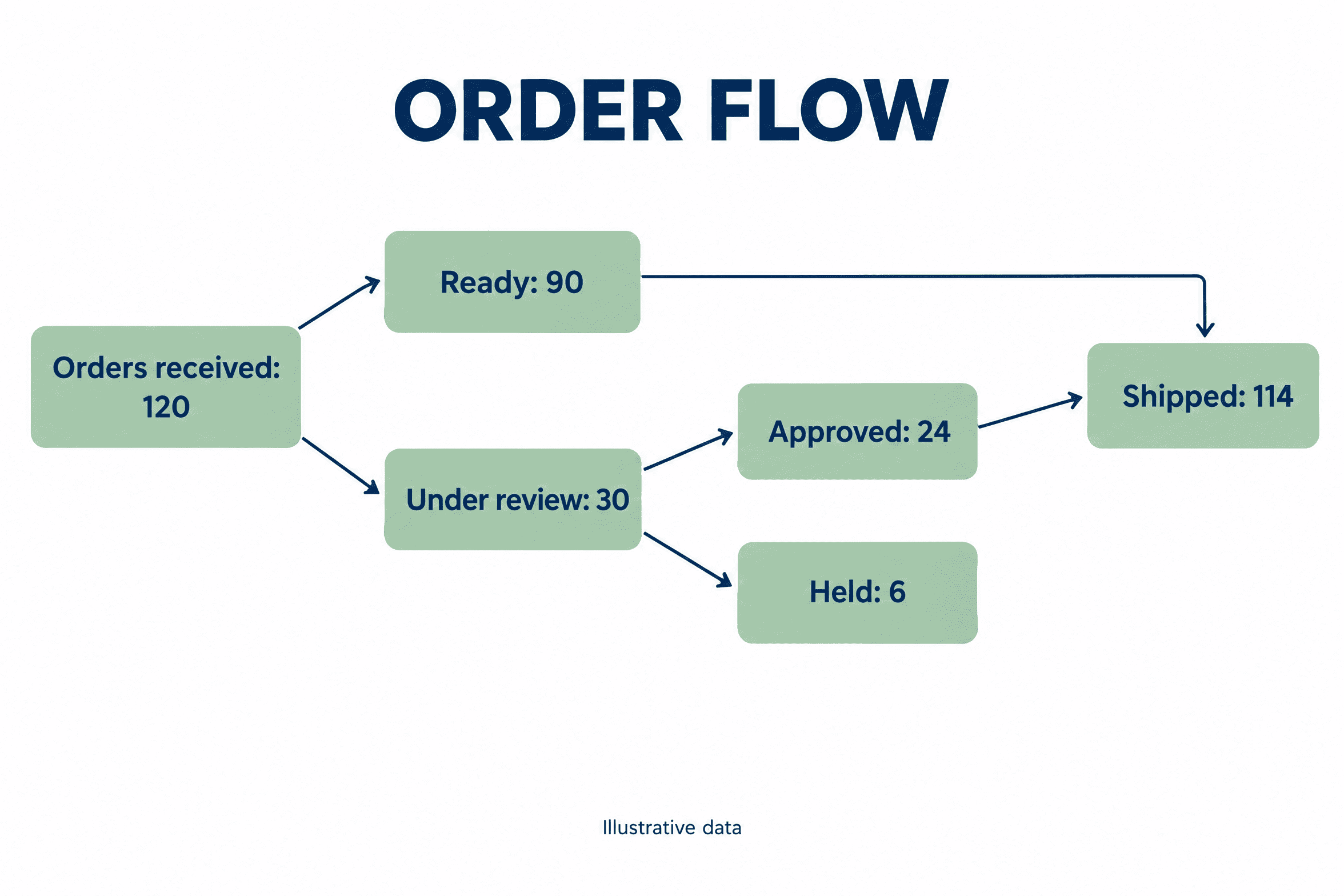
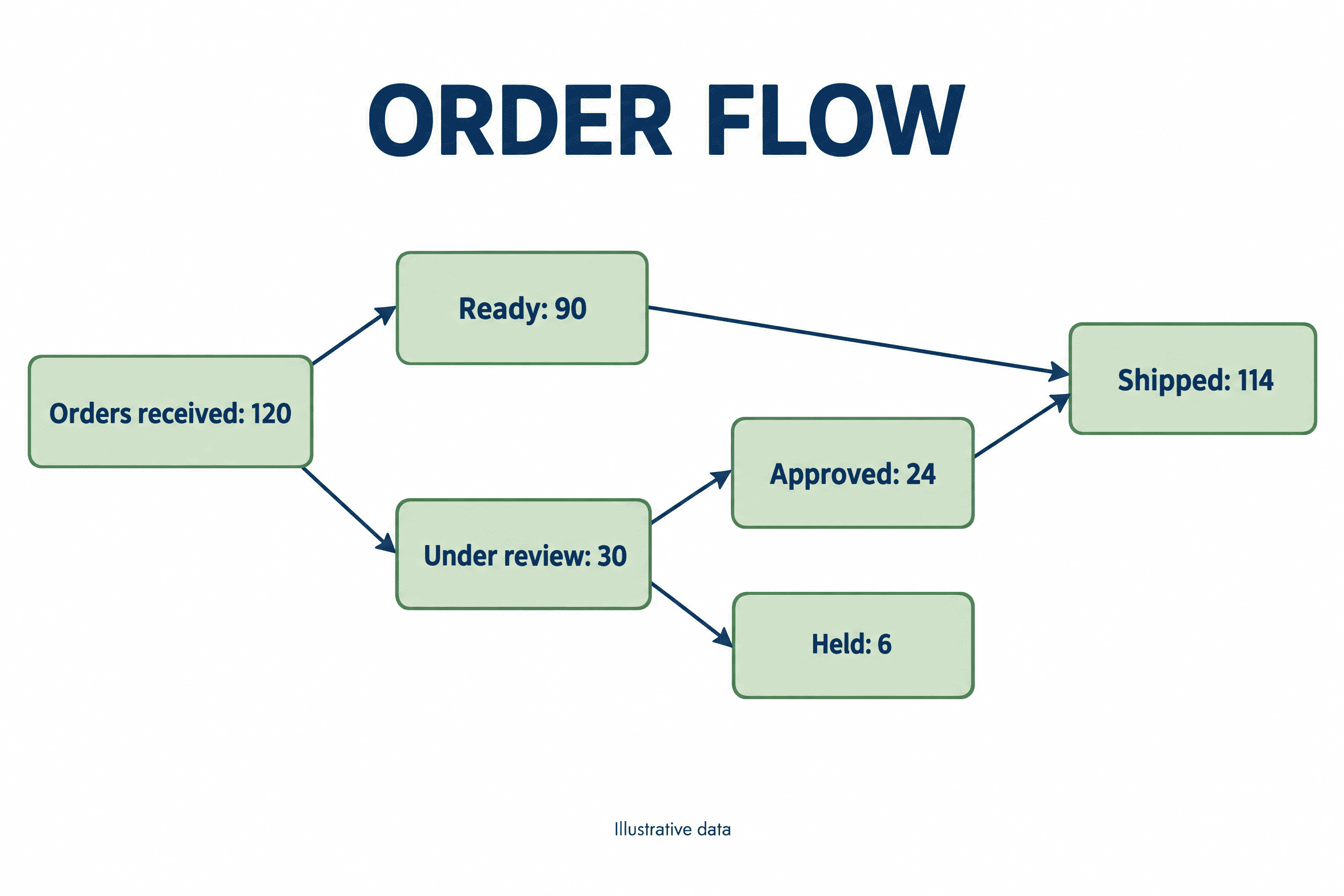
The infographic brief supplies fictional operations data. Of 120 received orders, 90 are ready and 30 require review. Review produces 24 approved orders and six held orders. The 90 ready orders and 24 approved orders then converge into 114 shipped orders. The output must contain exactly six labeled boxes, six directed connections, a title, and a small Illustrative data footer.
This is a useful American business-content scenario because it tests several things at once: English typography, numerical copying, spatial organization, and the direction of relationships. The figures are deliberately invented for testing. The task is to represent supplied information correctly, not to discover real business statistics or independently infer a process.
Both first attempts reproduce the six labels and their numbers correctly. Both include ORDER FLOW and Illustrative data. Tracing the arrows confirms the intended six relationships: received branches to ready and review; review branches to approved and held; ready and approved feed shipped. Neither output sends held orders to shipped, adds an extra process box, or substitutes a new total. The supplied arithmetic is internally consistent: 90 plus 30 is 120, 24 plus six is 30, and 90 plus 24 is 114.
The layouts differ in an intelligible way. Flare gives the ready-to-shipped connection a horizontal route followed by a downward turn. Sunburst draws that connection diagonally and gives the green boxes a stronger outline. Both arrangements make the merge understandable. The difference is chiefly presentation here, rather than one graph being logically right and the other wrong.
The wording remains legible in the delivered 2352-by-1568 files. The six-box structure is modest, however, and the prompt spells out every allowed arrow. This is positive evidence of instruction-following on a specified diagram, not evidence of general mathematical or factual reliability. More complex charts would still need a relationship-by-relationship check. Also, this is a raster graphic: the saved PNG does not supply editable chart objects or a spreadsheet behind the numbers.
Exact test prompt
Create a polished landscape infographic for an operations report. White background, navy typography, muted green process boxes, thin directional arrows, generous spacing, clear small chart typography. Title exactly 'ORDER FLOW'. Use these fictional test data, not real business statistics: 120 orders received split into 90 ready and 30 under review; the 30 under review split into 24 approved and 6 held; the 90 ready and 24 approved converge into 114 shipped. Show exactly six labeled boxes with these exact strings: 'Orders received: 120', 'Ready: 90', 'Under review: 30', 'Approved: 24', 'Held: 6', 'Shipped: 114'. Arrows must show only received to ready, received to review, review to approved, review to held, ready to shipped, and approved to shipped. Add one small footer exactly 'Illustrative data'. No other text or invented values. All labels readable. This is a finished report graphic, not an artistic sketch.
Test 3: Product Ads and Label Preservation
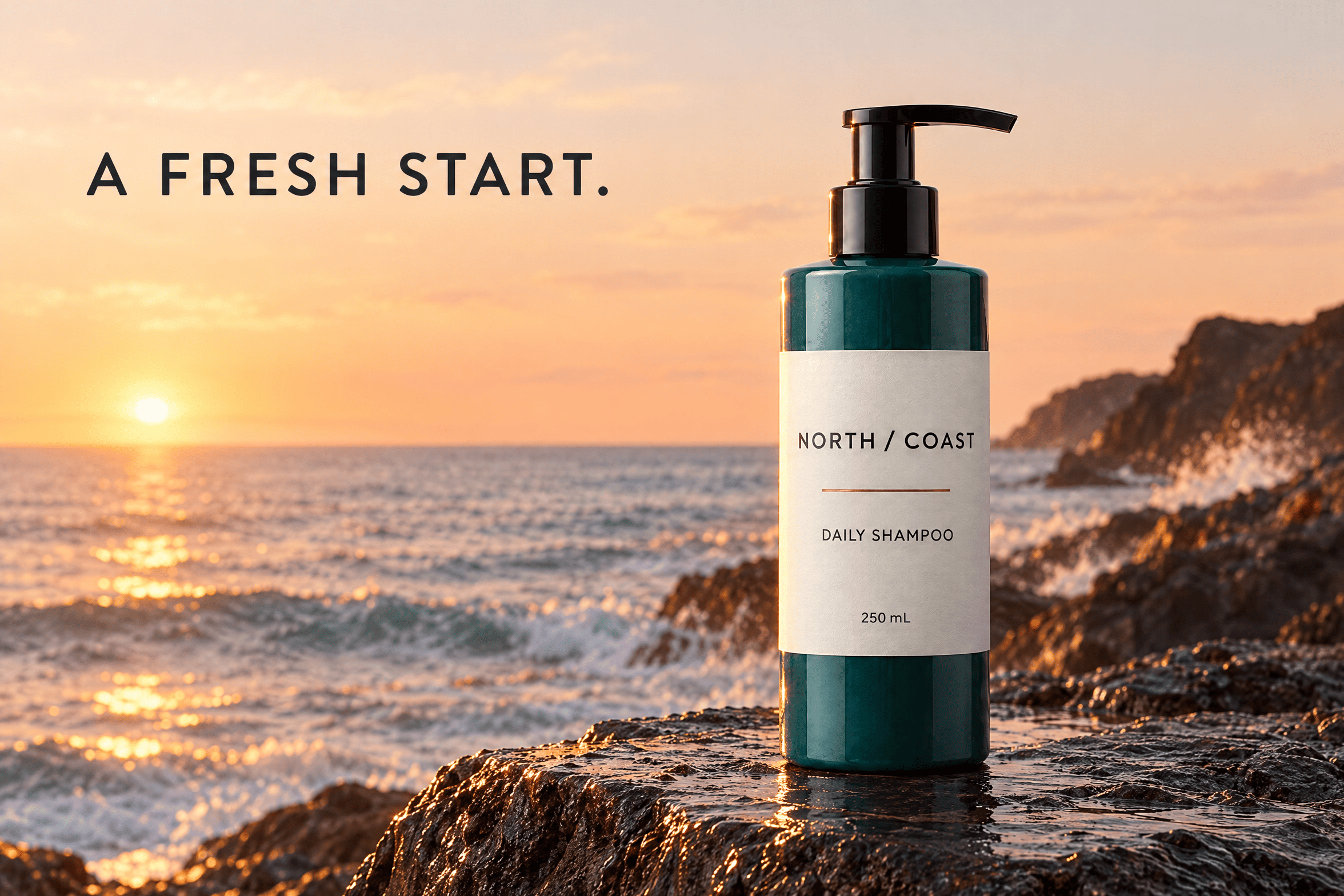
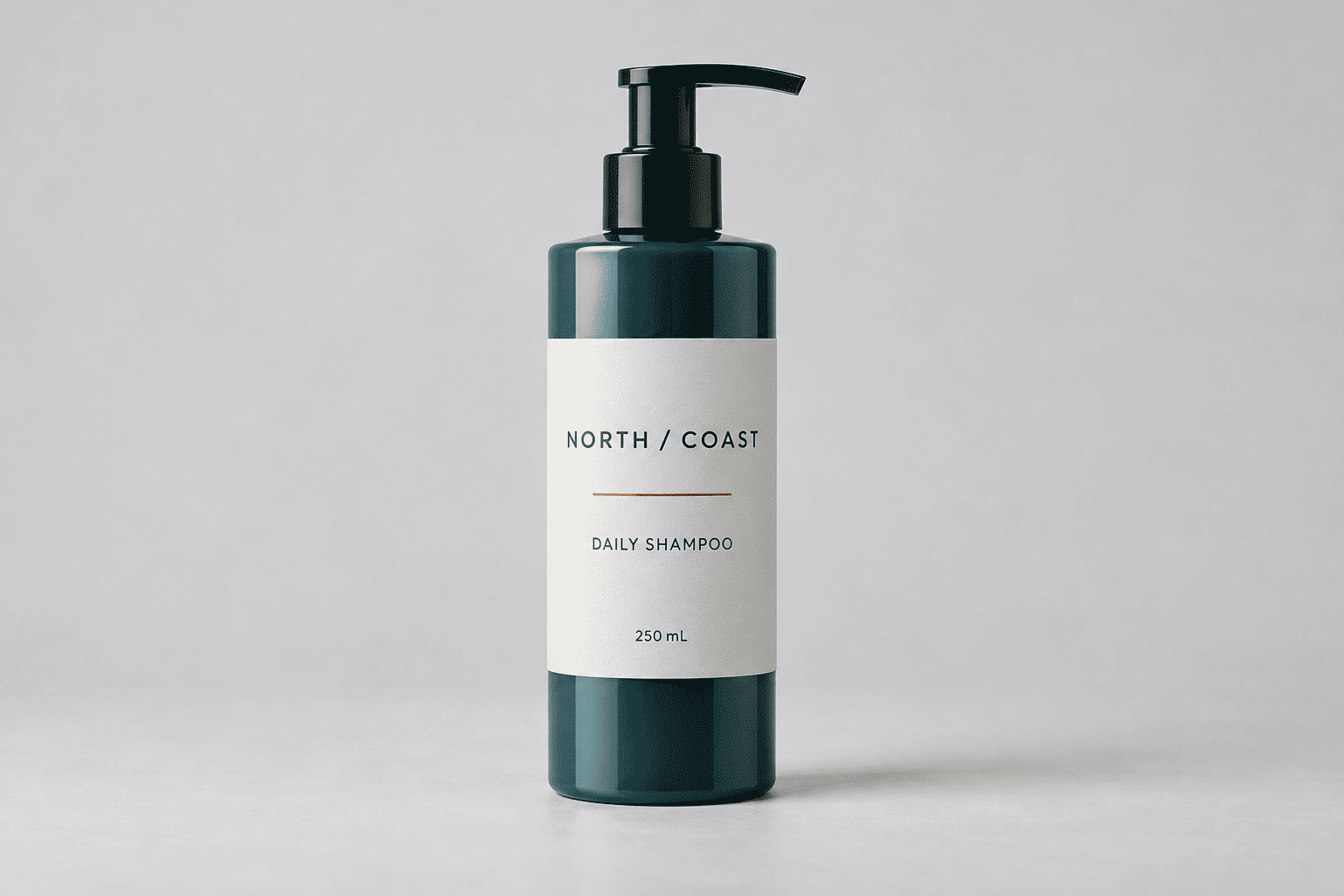
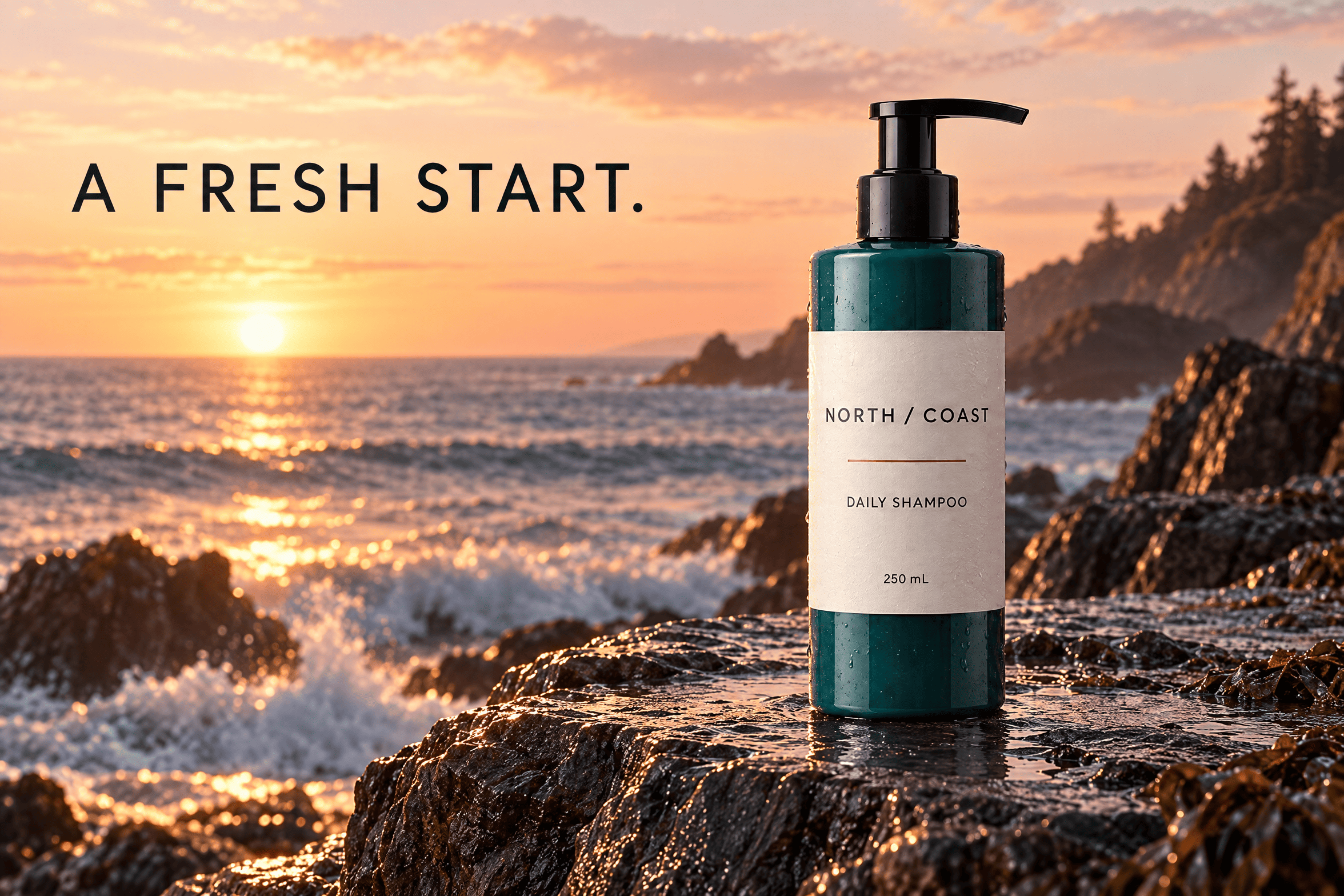
The advertisement starts with a fictional teal shampoo bottle photographed against a neutral background. Its ivory label contains three exact strings: NORTH / COAST, DAILY SHAMPOO, and 250 mL, separated in part by a thin copper rule. The black pump points right. The brief places the product on dark wet rock along a Pacific coast at sunset, with open space on the left and the headline A FRESH START. in the upper-left.
Both first attempts produce a coherent commercial composition. The bottle stands upright in the right half, the headline appears once in the requested area, and the ocean and warm sky provide the intended setting. Reflections and contact with the wet ledge make the bottle feel integrated with the scene. Neither output introduces another bottle or additional advertising copy.
The lettering check is favorable. The headline includes its final period, and all three package strings remain readable in both outputs. The copper rule and right-facing pump also survive. Those are more useful observations than simply calling the images premium: they describe the specific product information that remained available after the background changed.
The images are not identical product cutouts placed over new scenery. The bottle surface, highlights, texture, and apparent shape are rendered again. Sunburst adds conspicuous droplets to the bottle; Flare gives the scene a smoother, glowing treatment. The two bottles and labels occupy slightly different proportions in their respective compositions. These are visible creative interpretations, so a brand requiring exact package geometry should compare against its approved artwork before using either image as a final asset.
For an advertisement concept or an editorial illustration, both are strong first drafts. The results demonstrate that a reference, a composition brief, and short exact English text can work together. They do not prove that every small label, legal line, or repeated revision would survive. No seasonal follow-up was run, and no Photoshop correction or replacement lettering was used to produce the images shown here.
Exact test prompt
Use the supplied bottle as the exact product reference. Create a premium realistic haircare advertisement photographed on a rocky Pacific coast at sunset. The teal pump bottle stands upright on a dark wet slate ledge in the right half of the frame, large enough to read its ivory label. The left half provides pale peach sky and ocean negative space. Preserve the bottle's cylindrical proportions, black pump and nozzle direction, ivory label, thin copper rule, and every original label character: 'NORTH / COAST', 'DAILY SHAMPOO', '250 mL'. Place the headline 'A FRESH START.' exactly once in large clean dark sans-serif type in the upper-left. Keep all typography legible and away from the bottle. Believable sunset reflections, contact shadow, coastal rocks and ocean. No other text, people, additional bottles, logos, watermark, or collage. Landscape 3:2 composition.
Photo Editing Results: Portraits, Cards, and Repeated Edits
The advanced images are more varied, but each appears only once per website option. The photo baseline contributes the repetitions that those exploratory cases lack. It contains five independent tasks repeated three times, plus three complete three-step chains, for each option. The full supplement preserves the original article and all detailed comparisons.
Portrait brightening, a studio-style pet portrait, and removal of a blue trash can were the most straightforward successes. All nine outputs per option across these three tasks were suitable for ordinary digital sharing after visual inspection. The face became easier to see, the dog retained its broad black-and-white markings and red collar, and the blue can disappeared without a conspicuous break in the surrounding railing at normal viewing size. Small freckles, fur boundaries, and ground texture were still re-rendered. This is a creative-use judgment, not a nine-out-of-nine exact-preservation claim.
The holiday card is an especially relevant U.S. use case. All six files contain exactly Happy Holidays and The Miller Family, preserve four people, and keep the decorative foliage away from faces. The practical obstacle is the requested print format. The interface has no 5:7 preset, so both options were tested with its nearest 3:4 selection while the prompt retained the 5:7 request. Each returned 880 by 1184 pixels at 1K. A 5-by-7-inch card at 300 pixels per inch needs 1500 by 2100 pixels. These files therefore need format preparation and an appropriately larger render or finishing workflow; no physical card was printed.
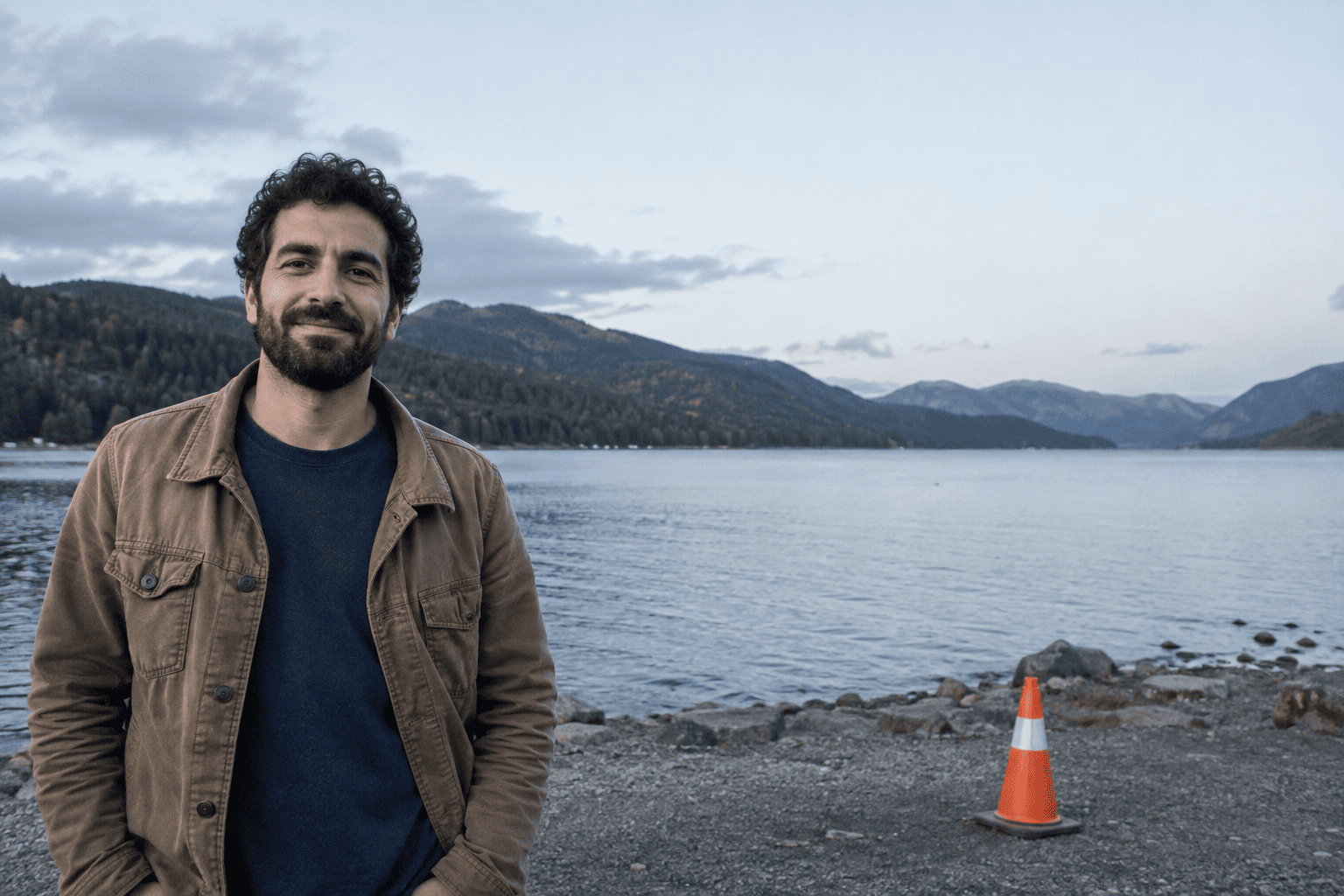
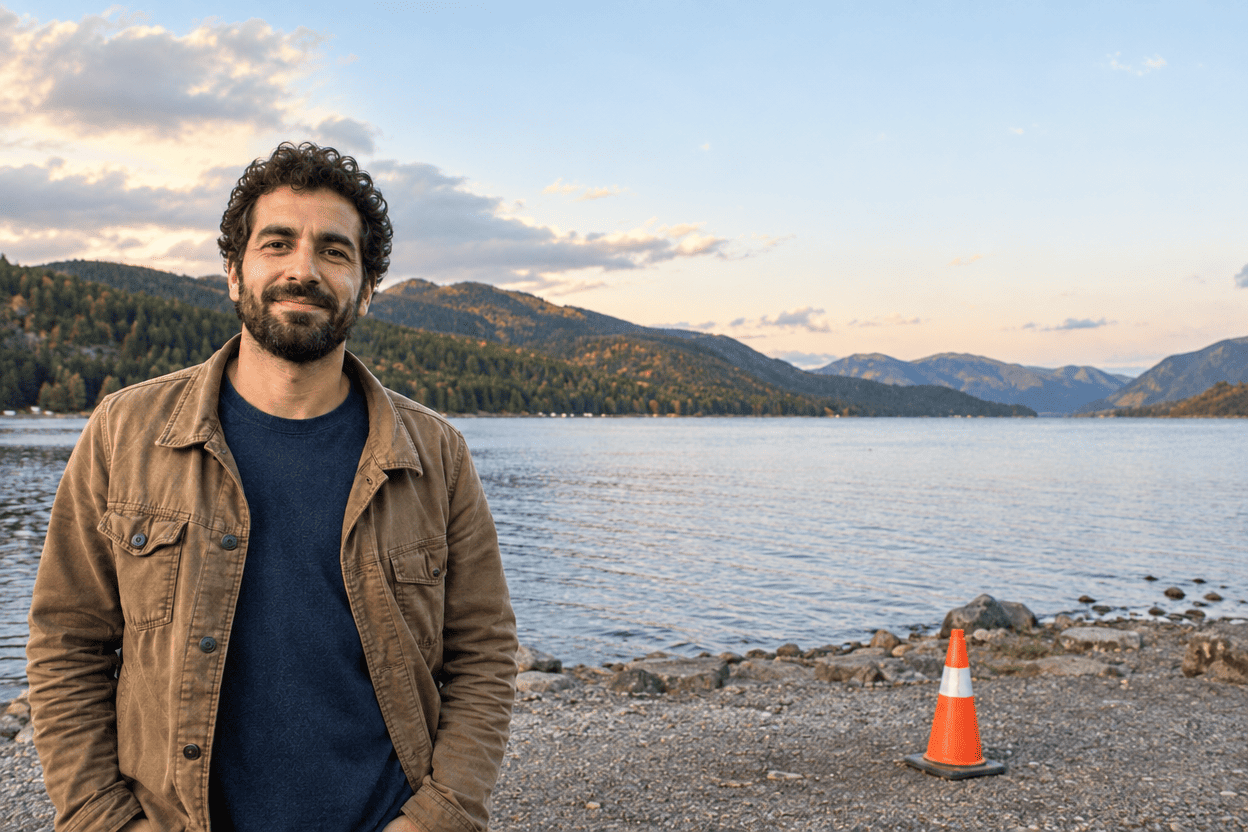
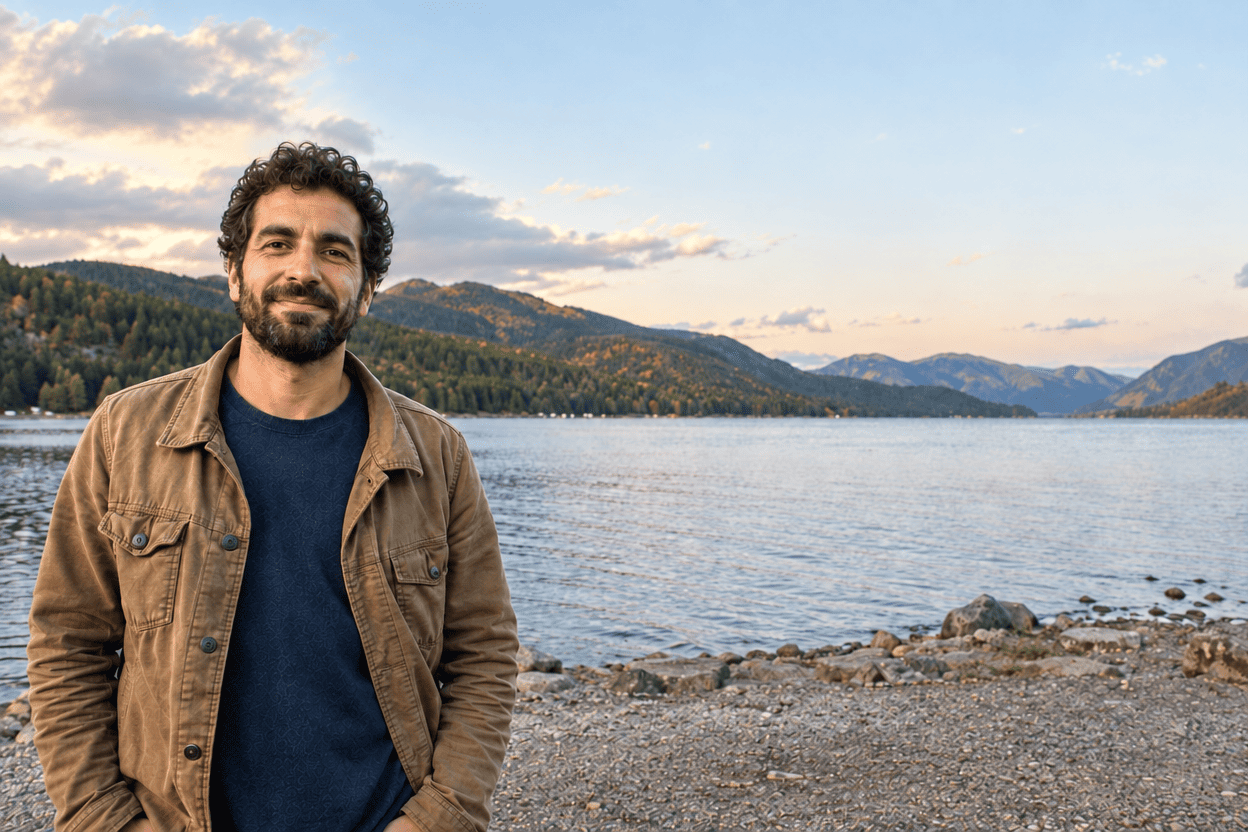
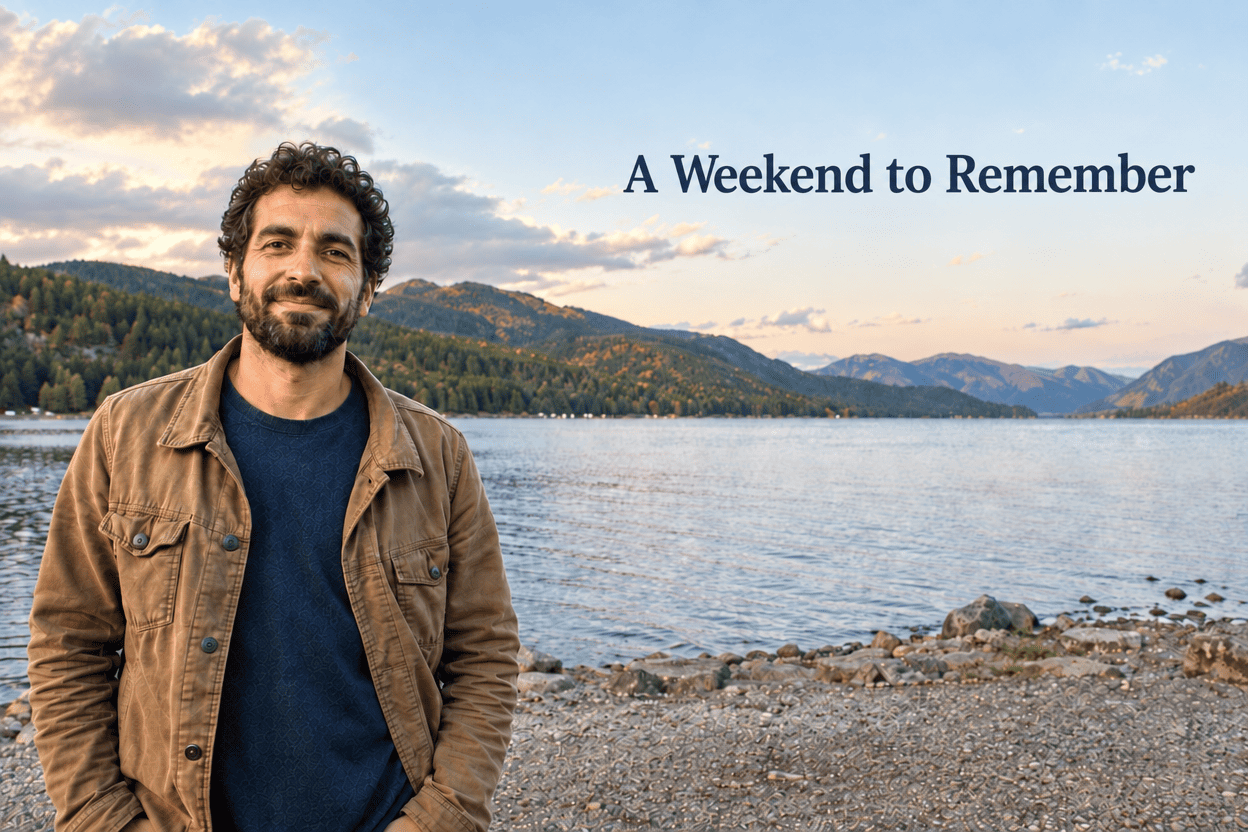
The editing chain exposes a different boundary. Starting with a lakeside portrait, the requests are to make the light slightly warmer and brighter, remove the orange cone, and add A Weekend to Remember in the upper-right sky. All six chains remove the cone and finish with the correct caption. Yet every first lighting edit replaces the original overcast sky with a more dramatic warm cloud arrangement. That exceeds the restrained correction. The later steps largely preserve that new interpretation, meaning a final image can retain previous edits while already having drifted away from the original scene.
Finally, restoration is deliberately unscored for historical fidelity. The imagegen step that created a scratched, faded input also changed clothing detail before the website received it. Both options remove prominent damage, but a crisper cardigan is not proof of recovered history. Attributing every mismatch to restoration would ignore the flawed control. Keeping that case visible, with its limitation, is more honest than folding it into a simple accuracy percentage.


Flare vs Sunburst: Generation Time and Credit Costs
At the selected baseline settings, each website call consumed three credits. The 48 calls cost 144 credits. After excluding the first Flare run's missing synchronized timer and a Flare restoration with a clock anomaly, the observed median submission-to-loaded-preview time was 38.0 seconds for Flare across 22 timed calls, versus 45.6 seconds for Sunburst across 24. Ranges were 31.8–85.5 and 37.1–70.2 seconds, respectively.
The six in-scope advanced images each cost four credits at 2K, High, PNG: 24 credits in total. Their observed waits ranged from 32.8 to 76.5 seconds. They are different tasks at a different resolution, so they are kept separate from the baseline timing summary. Total in-scope spending was 168 credits. Two already completed, out-of-scope translation experiments added eight credits to the expense audit, making the account's total observed deduction 176 credits.
The accepted A–C digital-sharing subset cost three credits per accepted image for either option. Counting the full baseline's spending against its nine accepted outputs per option gives eight credits each. That broader figure includes spending on unaccepted or unscored tasks and describes this test mix, not a universal rate. No strictly accepted final editing chain was obtained, so there is no defensible cost-per-success number for that constrained task. Dollar cost and human inspection time are unavailable.
How to Write More Precise Image Prompts
The strongest prompt in this review is not necessarily the one that produces the prettiest picture. It is the one that leaves the fewest ambiguities about success. Four habits make that distinction practical.
First, give each reference an explicit job. In the wardrobe test, image 1 supplies the person and setting, while image 2 supplies the garment. A request to combine two pictures without that division could reasonably change either the person or the background. When an edit is supposed to be local, name the allowed region and the protected details.
Second, specify verifiable content before aesthetic adjectives. The infographic has six boxes, six directed connections, and stated totals. The bottle has three label strings and a headline. Terms such as premium or cinematic can guide presentation, but they do not substitute for these requirements.
Third, keep successive revisions narrow. The repeated photo sequence separates a lighting adjustment, an object removal, and a caption. This makes drift observable. Asking for a new season, a new angle, different typography, and a different subject size in the same revision would make it much harder to say which previous decisions survived.
Finally, retain the failed constraint alongside the successful image. A carefully specified prompt can still produce a result that needs inspection or correction. The repeated photo test shows why: a request for warmer light can become a rewritten sky. Adding another sentence about preservation might help in a follow-up, but it would be a new experiment and should be labeled that way. These results should not be retroactively described as successes under a prompt that was never submitted.
Test Limitations and Image Preservation
This is a small test with synthetic inputs, one website, one date, and visual assessment. It does not establish performance across real family albums, uncommon languages, complex packaging, or every visual style. Generated source photos can also contain their own rendering quirks. None of the fictional people supplies an independent identity reference beyond the starting image.
The website may add processing, prompts, compression, or routing that is not visible in its interface. Its displayed model names do not resolve those uncertainties. Read Flare and Sunburst in this article as the tested website selections. Credit consumption is a measurement of that service, not a statement of OpenAI API pricing.
Speed is also an end-to-end observation. The timer starts at submission and stops when the new preview image has loaded, including the website and browser path. Local downloading and review are excluded. A missing timer and a clock anomaly are excluded from the baseline timing summary; their outputs and spending remain in the log. Browser scheduling can affect measurements, so small timing differences should not be treated as exact model latency differences.
Most importantly, exploratory advanced cases have one run per option. Their value is in visible, reproducible examples and specific failure modes. A broad claim that one option always preserves products better, reasons correctly about every chart, or handles all multi-reference edits would go beyond the evidence.
Final Verdict: Flare or Sunburst?
The official guide was a better inspiration for a broad review than six variations on photographic improvement. The wardrobe, diagram, and product cases show why: they test how references, structure, and exact English copy work together. Both website options produced useful first drafts in those three cases, with the diagram relationships and short advertising strings visibly correct.
The repeated photo tests add the necessary caution. Both options handled the simpler digital-sharing tasks well, but small details were reconstructed, print readiness required extra preparation, and the lighting sequence changed more of the scene than requested. Better prompts make those boundaries easier to identify; they do not remove them.
This set does not establish an overall quality winner between the website's Flare and Sunburst selections. Flare's lower baseline median wait is a practical observation, while the advanced images offer too few trials for a reliability ranking. For a U.S. creator preparing a product concept, a simple report graphic, or a holiday design, either option produced material worth developing in these tests. The final approval should depend on the protected detail: the package label, the process arrow, the family face, or the scene that was supposed to remain the same.
To try an English prompt from this review, open the GPT Image 2.5 image generator and editor, choose the relevant model option, and check the current settings and credit charge before submitting. The figures above record the tested session, rather than a promise of current pricing or output quality.
Test Images, Prompts, and Disclosure
The complete evidence gallery links every in-scope output. The photo-editing supplement provides the original six-case article, enlarged comparison windows, and all baseline prompts. The advanced prompts appear alongside their test results in this article.
Testing used the account's existing website credits; no new purchase was made during this session. The original funding source of those credits was not established, and no dollar cost is inferred from them. Imagegen was used to create reference materials, not to impersonate verified outputs of the two website options. Inspection time was not measured.
Published test record: September 9, 2026. The advanced set was added after reviewing the official prompting guide, then capped at three English-language cases. Two previously completed translation experiments fall outside the U.S.-audience scope; they are excluded from the article and scoring, with eight credits retained in the expense audit. Planned seasonal revisions and the comic were not run. The restoration case was excluded from accuracy scoring because generated damage altered source content. Timing exclusions, actual output dimensions, all prompts, and original image files remain available for checking or later retesting.